
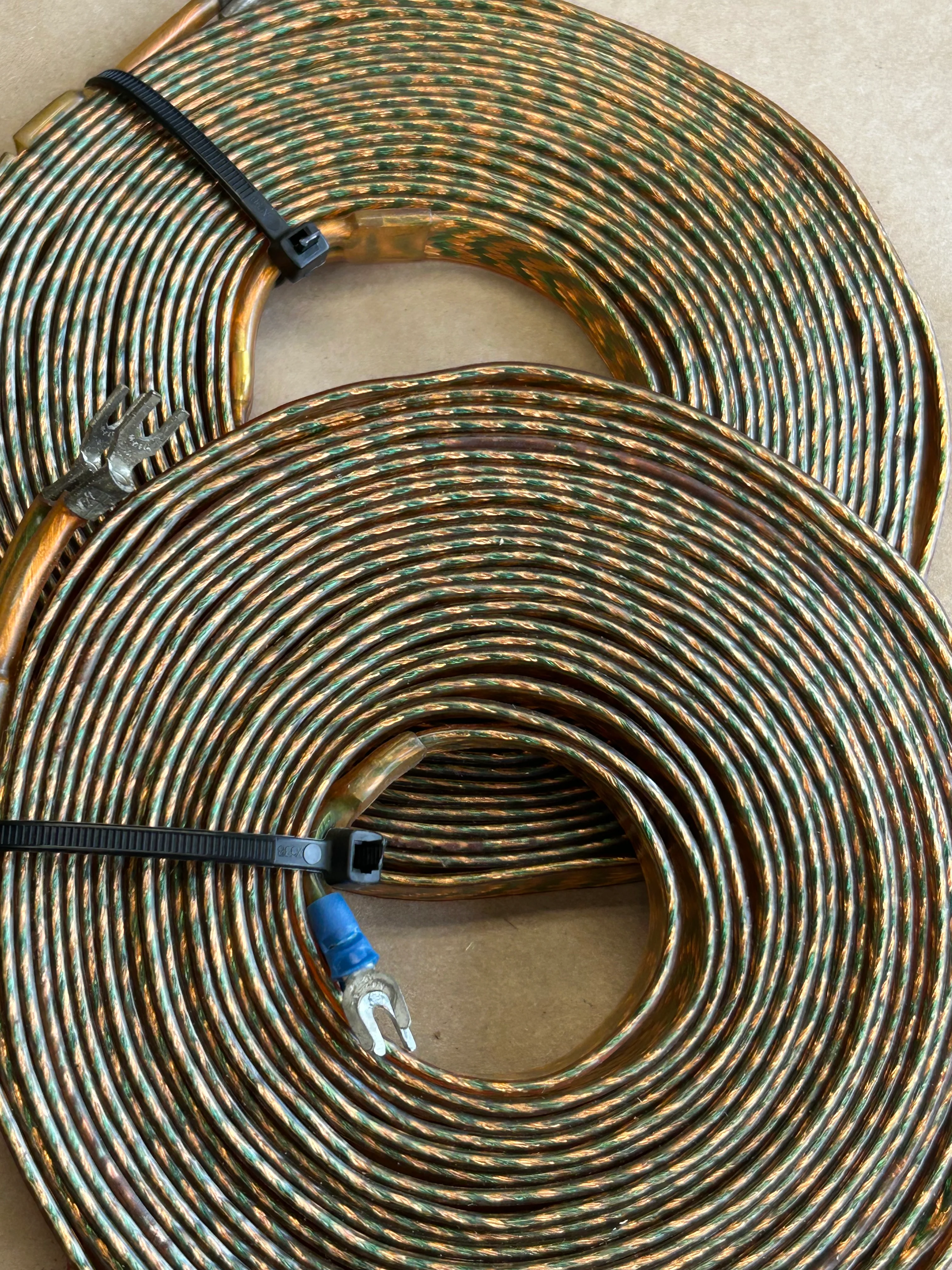
OTK SHF SP Cord - AKA Polk Cobra Speaker Cable Set - 25ft x 2 -
This speaker wire (6 or 8 cables in parallel) is superior to every other cable I have compared it with, at all prices points, for over 40 years now. It was even far superior to the $15,000, top-of-the-line Kimber at the Las Vegas CES show some years ago.
The Polk is extremely transparent, lucid, clean and extended in the highs. Accordingly, it is not a good match for those audiophiles looking for something "euphonic" to compliment digital or solid-state sound. It is the most revealing cable I have ever heard and it must be used in parallel or else it will sound noticeably "lean" on low-impedance, or even average impedance, speakers. For same actual examples...
Based on our collective, long-term experiences, for a standard 6' length, eight cables in parallel will work with everything, and four cables with most speakers*. The rule is simple; The overall length must be as short as possible, with the added benefit that less cables (in parallel) are required at the same time (my own Polk cables, since 2008, are 3' long, with 6 cables in parallel).
The Polk does have one noticeable weakness; its bass transmission is not quite the equal of some of its rivals in both the areas of weight and impact, but its bass definition is still as good as anything made even today. Even more relevant, the Polk is now the finest speaker cable in only ultra-pure, minimalist systems (such as my own Reference System). The Coincident Extreme speaker cable, see below, has proven to be as good, or superior, in more typical systems, meaning those that are using push-pull amplification (and, I assume, multiple speaker drivers).
*One Polk cable will work extremely well with tweeters.
Polk Speakers did not manufacture this cable. It was designed and manufactured by a cable company in Japan (OTK). Polk marketed it at the time as an alternative to the early Fulton cables (see below). According to an inside source, they were aware of what they had, the best speaker cables around, but they marketed it in the wrong manner. They sold it in single pairs and in very long lengths. Unfortunately, that is the exact opposite of the correct method for optimizing its unequalled potential.
The predictable result: Very few people ever heard this cable at its best.
If that wasn't enough, all of the reviewers at the time, with one notable exception, dismissed this cable as inferior, if not actually dangerous to use (with transistor amplifiers of the time). This all occurred when there was the initial explosion of cable companies back in the early 1980s. The predictable result: The Polk was quickly forgotten by almost everyone.
There are no "secrets" or "magic" behind the unprecedented performance of this cable. Polk simply has the lowest inductance of any cable ever made, which means it is the "fastest" cable, and it is also the speaker cable with the most extended high frequencies.
The Polk cable has other technical advantages as well: The actual wire is very fine and pure, and it is very well damped on both its inside and outside by polyethylene. Both the resistance and capacitance are high. The resistance can be easily reduced by both shortening the cable and also running them in parallel. The high capacitance is not a problem for tube amplifiers, but it may be a serious problem for unstable (meaning usually older) transistor models.
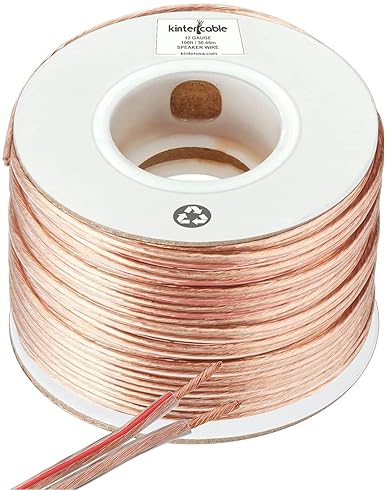
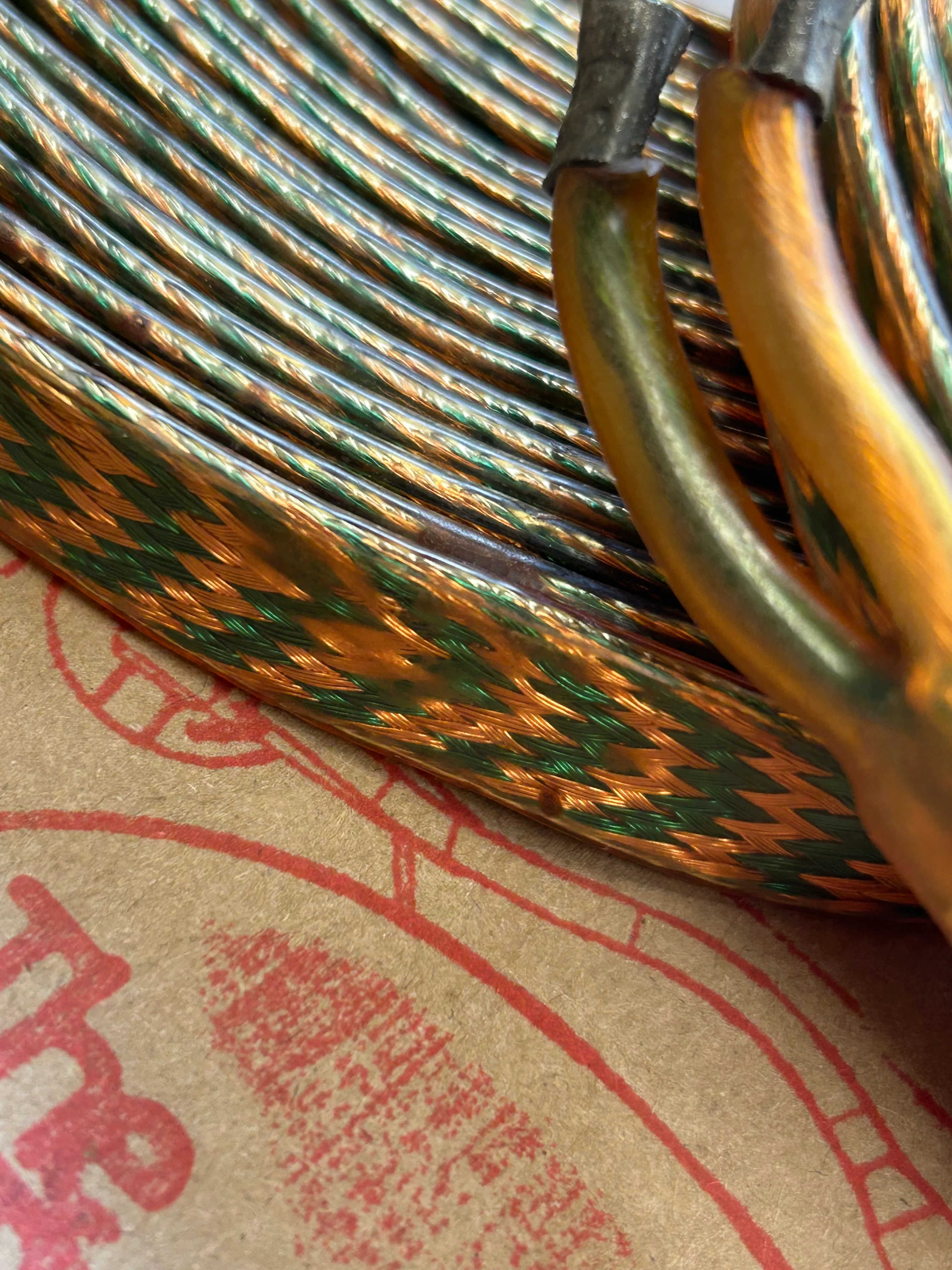
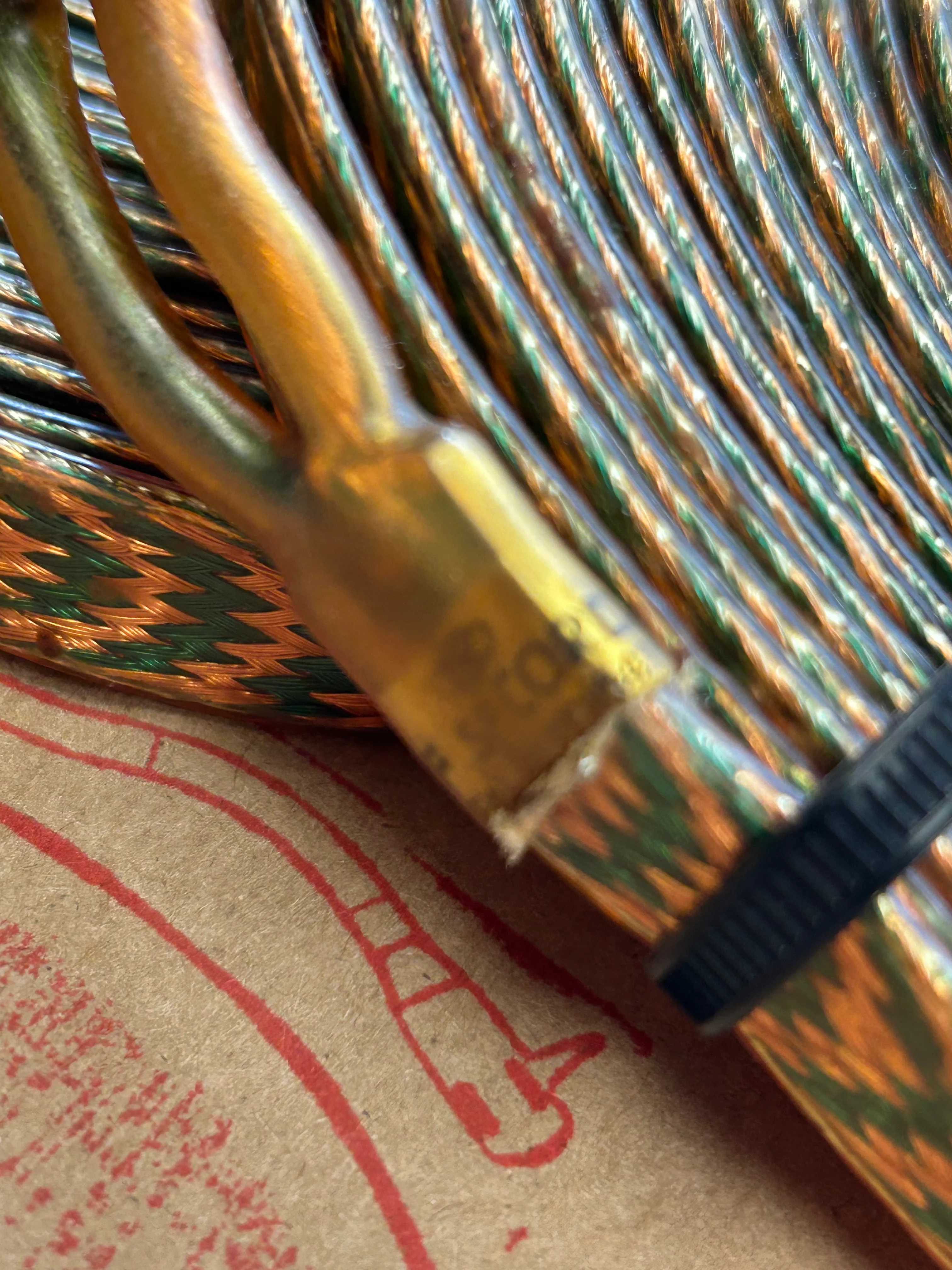
The Polk is round* and about the same diameter as a common interconnect. Through the clear outer plastic, you can see the very fine green and copper wires, bundled together, and intertwined (overlapped) with each other.
(*There is also a flat version of the Polk. The flat Polk is not quite as good as the round version, but it is still noticeably superior to most other speaker cables, at any price.)
The reason there is not a "short circuit", despite the numerous overlaps, is because every single wire has a clear insulation around it, which must be burnt off to make the required connections to the amplifier and speakers.
Polk was never manufactured and/or marketed in its optimum form. It must be built using the original, raw, single-run cables. This will not be a simple, "fun" project. It is more accurately described as a true challenge, as I will now explain in more detail:
Caveats: The Polk is very tedious, difficult and even dangerous to build and terminate properly:
1. All the paralleled cables must be exactly the same length, or you lose focus.
2. All the "greens" must be in parallel together, and so must all the "coppers", never both green and copper "runs" of the same cable.
3. All the green and copper individual wires and "bundles" must be kept totally separated from each other or there will be a "short" (use a voltmeter to verify this).
4. A very high temperature soldering iron or solder pot is required to remove the clear insulation on each tiny strand.
5. The fumes, resulting from burning off the insulation, are toxic.
6. The paralleled cables should be in as intimate contact as possible, to reduce both micro-vibrations and inductance.
Further- Amazingly, the Polk cables were made out of copper. Only one audio reviewer heard (and measured) the potential of this cable when it was available, brand new, 30 years ago; Peter Moncrieff of International Audio Review. Here is part of what he wrote in IAR Issue No #9:
"If only Polk's resistance were lower, it would be a virtually perfect speaker cable...The beautifully flat error curve of Polk suggests a plan for creating the virtually perfect cable: run many Polks in parallel."
I, and a few of my associates, just followed Peter Moncrieff's theoretical "plan", and it actually worked. That's why it is still in Class A after all these years.
Further (11/05)- This Japanese designed and manufactured speaker cable, only marketed by Polk in North America, was also sold in Europe by another name. This was unknown to me until I received this e-mail from a reader:
"Here in Norway, the Polk Cobra (speaker cable) was sold under the name Monitor Audio. I bought a pair of Polk Cobra on ebay last year, and they are identical to the Monitor Audio I have. I bought the Monitor Audio back in the early eighties."
Personal Note- Needless to say, my description for the Polk Speaker Cable now also applies to the equivalent Monitor Audio speaker cable, and so do all the respective caveats and warnings.
Product Information
Product Information
Shipping & Returns
Shipping & Returns
Description
This speaker wire (6 or 8 cables in parallel) is superior to every other cable I have compared it with, at all prices points, for over 40 years now. It was even far superior to the $15,000, top-of-the-line Kimber at the Las Vegas CES show some years ago.
The Polk is extremely transparent, lucid, clean and extended in the highs. Accordingly, it is not a good match for those audiophiles looking for something "euphonic" to compliment digital or solid-state sound. It is the most revealing cable I have ever heard and it must be used in parallel or else it will sound noticeably "lean" on low-impedance, or even average impedance, speakers. For same actual examples...
Based on our collective, long-term experiences, for a standard 6' length, eight cables in parallel will work with everything, and four cables with most speakers*. The rule is simple; The overall length must be as short as possible, with the added benefit that less cables (in parallel) are required at the same time (my own Polk cables, since 2008, are 3' long, with 6 cables in parallel).
The Polk does have one noticeable weakness; its bass transmission is not quite the equal of some of its rivals in both the areas of weight and impact, but its bass definition is still as good as anything made even today. Even more relevant, the Polk is now the finest speaker cable in only ultra-pure, minimalist systems (such as my own Reference System). The Coincident Extreme speaker cable, see below, has proven to be as good, or superior, in more typical systems, meaning those that are using push-pull amplification (and, I assume, multiple speaker drivers).
*One Polk cable will work extremely well with tweeters.
Polk Speakers did not manufacture this cable. It was designed and manufactured by a cable company in Japan (OTK). Polk marketed it at the time as an alternative to the early Fulton cables (see below). According to an inside source, they were aware of what they had, the best speaker cables around, but they marketed it in the wrong manner. They sold it in single pairs and in very long lengths. Unfortunately, that is the exact opposite of the correct method for optimizing its unequalled potential.
The predictable result: Very few people ever heard this cable at its best.
If that wasn't enough, all of the reviewers at the time, with one notable exception, dismissed this cable as inferior, if not actually dangerous to use (with transistor amplifiers of the time). This all occurred when there was the initial explosion of cable companies back in the early 1980s. The predictable result: The Polk was quickly forgotten by almost everyone.
There are no "secrets" or "magic" behind the unprecedented performance of this cable. Polk simply has the lowest inductance of any cable ever made, which means it is the "fastest" cable, and it is also the speaker cable with the most extended high frequencies.
The Polk cable has other technical advantages as well: The actual wire is very fine and pure, and it is very well damped on both its inside and outside by polyethylene. Both the resistance and capacitance are high. The resistance can be easily reduced by both shortening the cable and also running them in parallel. The high capacitance is not a problem for tube amplifiers, but it may be a serious problem for unstable (meaning usually older) transistor models.
The Polk is round* and about the same diameter as a common interconnect. Through the clear outer plastic, you can see the very fine green and copper wires, bundled together, and intertwined (overlapped) with each other.
(*There is also a flat version of the Polk. The flat Polk is not quite as good as the round version, but it is still noticeably superior to most other speaker cables, at any price.)
The reason there is not a "short circuit", despite the numerous overlaps, is because every single wire has a clear insulation around it, which must be burnt off to make the required connections to the amplifier and speakers.
Polk was never manufactured and/or marketed in its optimum form. It must be built using the original, raw, single-run cables. This will not be a simple, "fun" project. It is more accurately described as a true challenge, as I will now explain in more detail:
Caveats: The Polk is very tedious, difficult and even dangerous to build and terminate properly:
1. All the paralleled cables must be exactly the same length, or you lose focus.
2. All the "greens" must be in parallel together, and so must all the "coppers", never both green and copper "runs" of the same cable.
3. All the green and copper individual wires and "bundles" must be kept totally separated from each other or there will be a "short" (use a voltmeter to verify this).
4. A very high temperature soldering iron or solder pot is required to remove the clear insulation on each tiny strand.
5. The fumes, resulting from burning off the insulation, are toxic.
6. The paralleled cables should be in as intimate contact as possible, to reduce both micro-vibrations and inductance.
Further- Amazingly, the Polk cables were made out of copper. Only one audio reviewer heard (and measured) the potential of this cable when it was available, brand new, 30 years ago; Peter Moncrieff of International Audio Review. Here is part of what he wrote in IAR Issue No #9:
"If only Polk's resistance were lower, it would be a virtually perfect speaker cable...The beautifully flat error curve of Polk suggests a plan for creating the virtually perfect cable: run many Polks in parallel."
I, and a few of my associates, just followed Peter Moncrieff's theoretical "plan", and it actually worked. That's why it is still in Class A after all these years.
Further (11/05)- This Japanese designed and manufactured speaker cable, only marketed by Polk in North America, was also sold in Europe by another name. This was unknown to me until I received this e-mail from a reader:
"Here in Norway, the Polk Cobra (speaker cable) was sold under the name Monitor Audio. I bought a pair of Polk Cobra on ebay last year, and they are identical to the Monitor Audio I have. I bought the Monitor Audio back in the early eighties."
Personal Note- Needless to say, my description for the Polk Speaker Cable now also applies to the equivalent Monitor Audio speaker cable, and so do all the respective caveats and warnings.