



Nightingale ARMONIA * Tube Integrated Amplifier * 20W Class A * EL84 Tubes


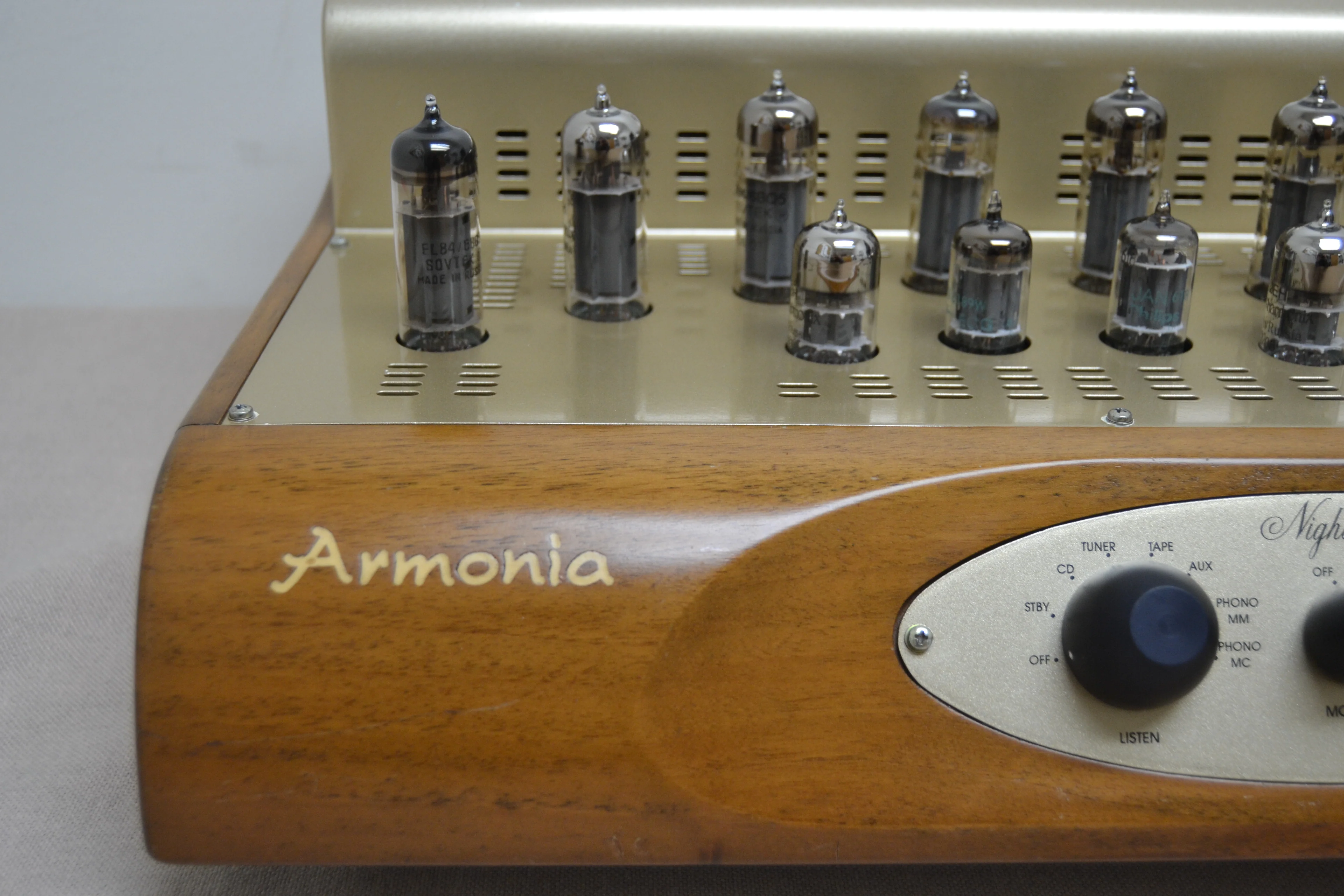
Watching the movie The Red Violin the other night, I was reminded of the Nightingale Armonia amplifier. The Red Violin exuded musicality and charmed its owners through the ages. The Armonia, with its walnut cabinet and champagne top panel, also has the look and feel of an Old World instrument, yet its designers have implemented features that make it competitive with today's high quality competition.
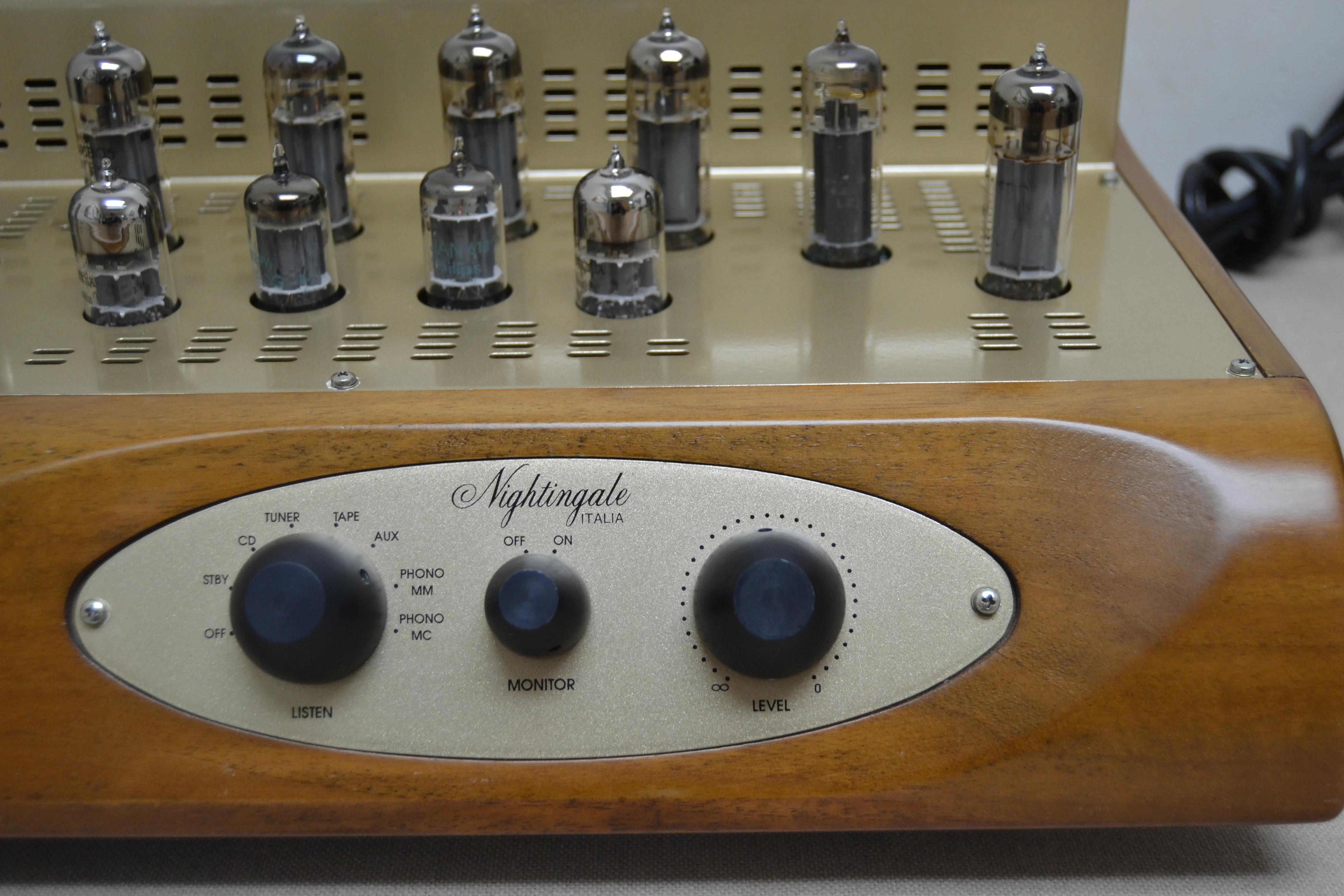
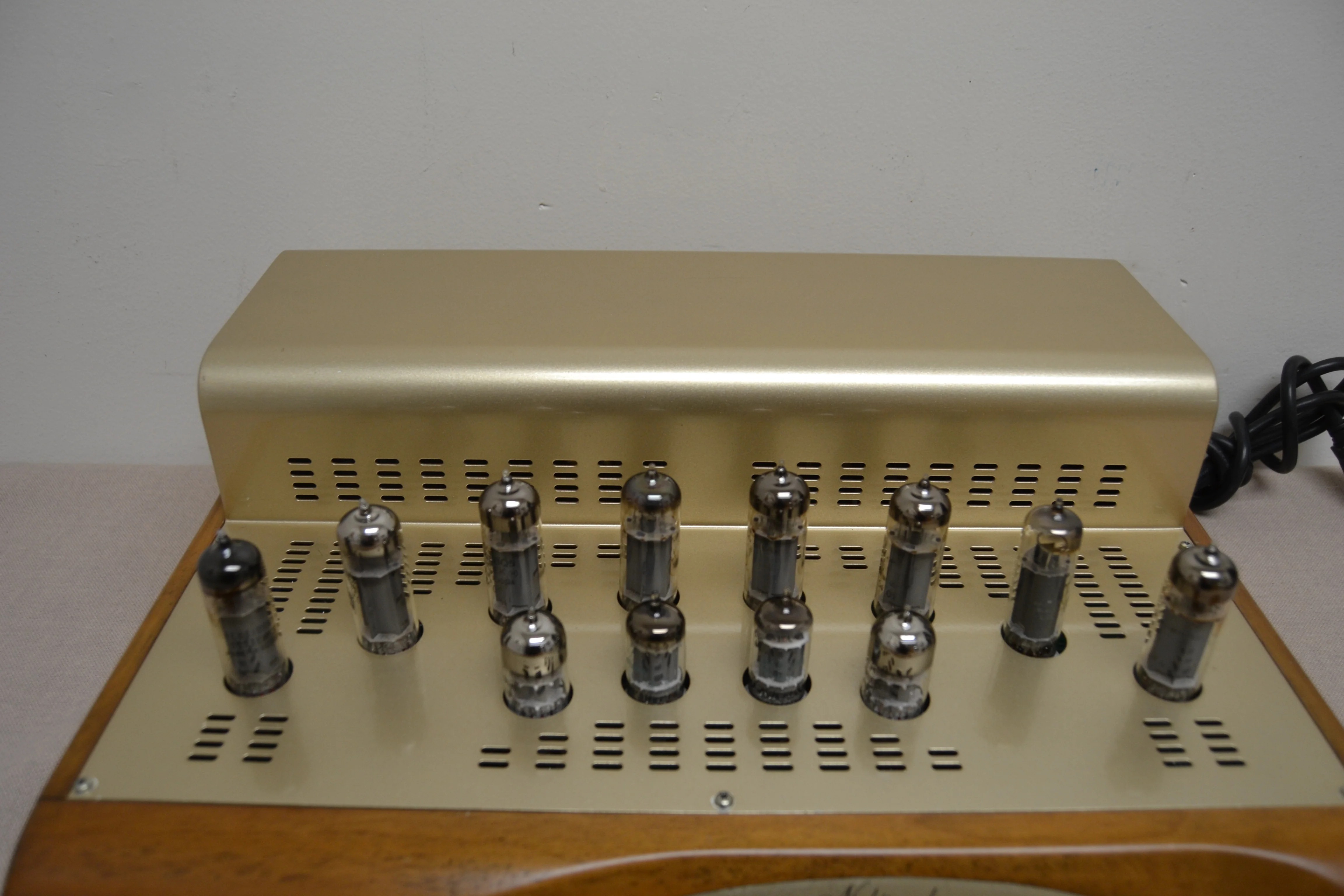
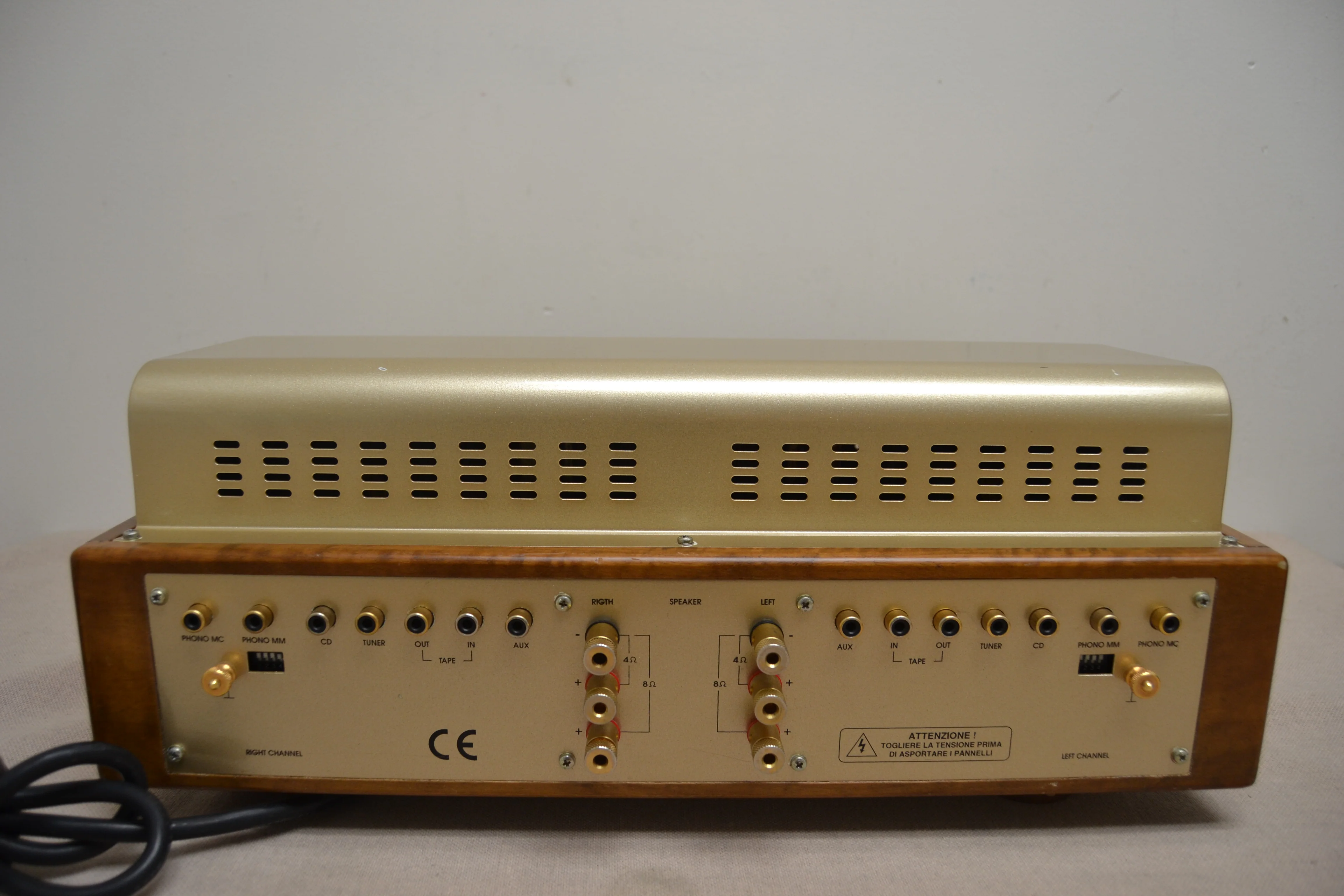
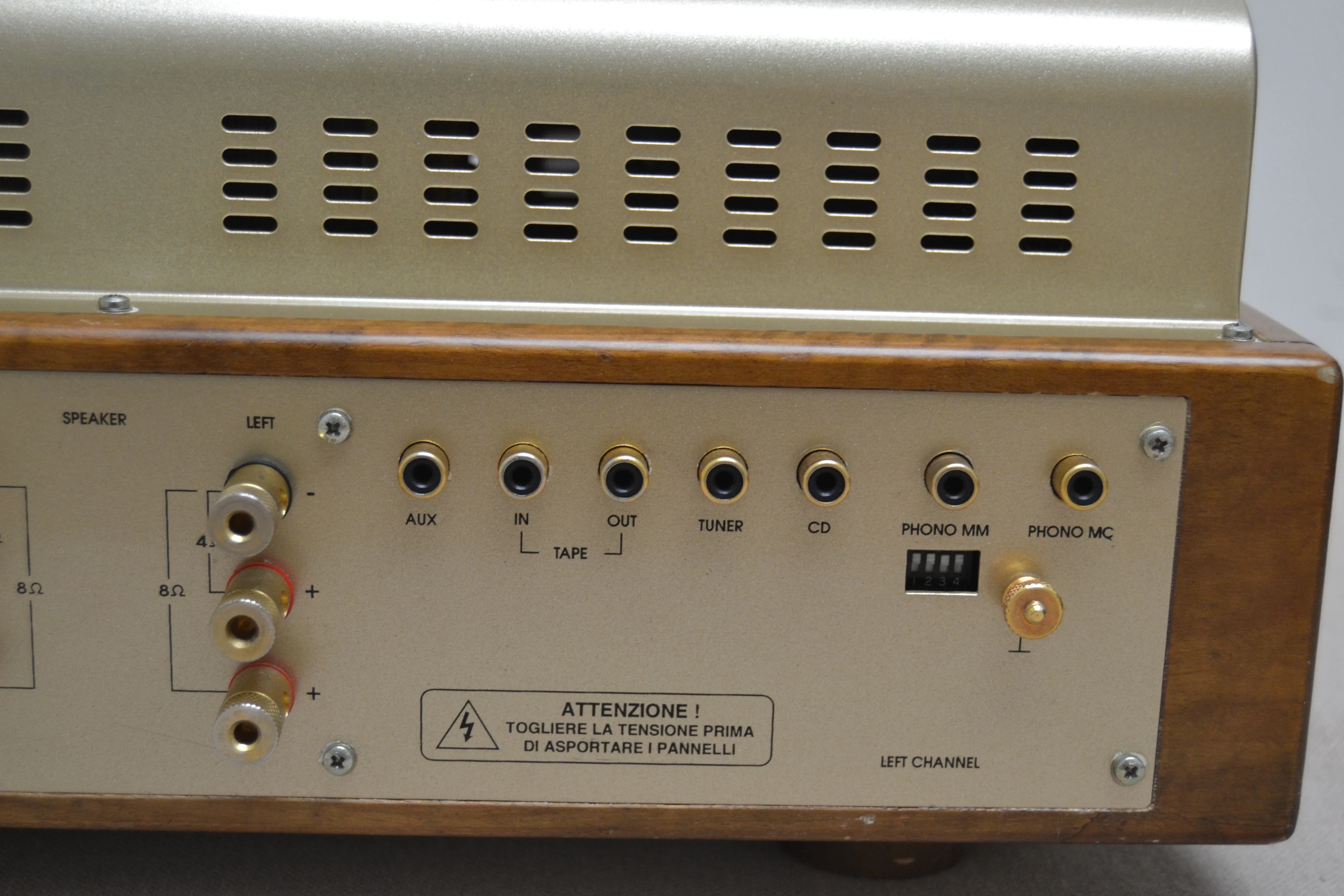
The Armonia is a 20-watt-per-channel integrated amplifier that operates in class A. It has automatic adjustment of bias current to within 0.5% and a standby function that keeps the tube filaments heated when the amp is turned off—features that will be welcomed by most tube amp lovers. It is equipped with four inputs plus an MM and MC phono stage and a tape loop. The tube complement consists of eight EL84s, two E88CCs for the preamp, and two E82CC phase inverters. The build quality and fit and finish are topnotch, and the metal work and walnut chassis make it quite beautiful to behold.
With all of those tubes, I expected the Armonia to sound on the warm side. It does, a little, but don't get the wrong idea. Harmonics sound full and natural, not thin or bleached out. The 20 watts under its hood are very fast and dynamic, yet the Armonia brings across the body and weight of an instrument. On my Deutsche Grammophon CD of Beethoven's Fifth and Sixth Symphonies, I was treated to a conductor (Herbert Von Karajan) that didn't spare the whip. Although transients were slightly less hard-hitting and punchy than with my Canary Audio combo, the dynamics were very satisfying, and the music moved along very well. The low end was full and strong, with the texture, tone, and timbre of the bass fiddles brought out in all their natural glory. I also heard very good reproduction of electric bass on pop music CDs, from Otis Rush to Government Mule. The electric and acoustic basses that are played together on several tracks on Orlando "Cachaito" Lopez' new CD were easily recognized.
CDs by Sara McLachlan and Sade always seem to be in my player. These discs are generally well recorded, but they do sound like CDs. The Armonia smoothed over some nasty digital peaks here and there, yet managed not to mask small details. Willie Nelson's voice on a few of his discs sounded smoother and less bright than with my amps. Just a smidgen of gravel was gone, but the character of his voice came through. The sheen of cymbals took on a more rounded, smoother, and slightly less sharp character, and I noticed a tad less air and sparkle. The midrange was a bit closed in, but then, my Antique Sound and Canary amps and my Canary preamp are a little bit bright.
 The Armonia produced a satisfying recreation of space and dimension, although not as spacious as my Canary combo. With my amps, I can hear more clearly into the music, on a more open stage. The Armonia's inner detailing was very good, though, and I could close my eyes and get drawn into the music. The Armonia paid musical dividends on Gabriela Anders' CD, Wanting. This beautiful Brazilian singer exudes charm in every note she sings. Her subtle and sultry voice whispered romantic lyrics in my ear throughout this disc. Yeah! Details were not razor sharp (thank God) nor did the amp resolve the very last recesses of the soundstage. Then again, it was easy to get caught up in the music and forget such things.
The Armonia drove my new Spendor 2/3s (88 dB) and the Zu Druid speakers (101 dB) with ease, but I wouldn't push it. The amp ran fairly quietly, and was trouble free, with the exception of a turn-on thump that had me slightly concerned each time I turned it on. The real strength of the Armonia is its musicality. This amp has a sweet, smooth, and clean way of handling the music that passes through it. It has that quality that is elusive in so many audiophile components—the ability to draw you in to the music. Some amps may have better resolution, but don't bring the music across in a natural manner. Some have wider soundstages, but aren't as involving. The Nightingale Armonia has gorgeous looks, loads of features, and delivers the musical goods! Francisco Duran
Original: $1,200.00
-65%$1,200.00
$420.00Product Information
Product Information
Shipping & Returns
Shipping & Returns
Description
Watching the movie The Red Violin the other night, I was reminded of the Nightingale Armonia amplifier. The Red Violin exuded musicality and charmed its owners through the ages. The Armonia, with its walnut cabinet and champagne top panel, also has the look and feel of an Old World instrument, yet its designers have implemented features that make it competitive with today's high quality competition.
The Armonia is a 20-watt-per-channel integrated amplifier that operates in class A. It has automatic adjustment of bias current to within 0.5% and a standby function that keeps the tube filaments heated when the amp is turned off—features that will be welcomed by most tube amp lovers. It is equipped with four inputs plus an MM and MC phono stage and a tape loop. The tube complement consists of eight EL84s, two E88CCs for the preamp, and two E82CC phase inverters. The build quality and fit and finish are topnotch, and the metal work and walnut chassis make it quite beautiful to behold.
With all of those tubes, I expected the Armonia to sound on the warm side. It does, a little, but don't get the wrong idea. Harmonics sound full and natural, not thin or bleached out. The 20 watts under its hood are very fast and dynamic, yet the Armonia brings across the body and weight of an instrument. On my Deutsche Grammophon CD of Beethoven's Fifth and Sixth Symphonies, I was treated to a conductor (Herbert Von Karajan) that didn't spare the whip. Although transients were slightly less hard-hitting and punchy than with my Canary Audio combo, the dynamics were very satisfying, and the music moved along very well. The low end was full and strong, with the texture, tone, and timbre of the bass fiddles brought out in all their natural glory. I also heard very good reproduction of electric bass on pop music CDs, from Otis Rush to Government Mule. The electric and acoustic basses that are played together on several tracks on Orlando "Cachaito" Lopez' new CD were easily recognized.
CDs by Sara McLachlan and Sade always seem to be in my player. These discs are generally well recorded, but they do sound like CDs. The Armonia smoothed over some nasty digital peaks here and there, yet managed not to mask small details. Willie Nelson's voice on a few of his discs sounded smoother and less bright than with my amps. Just a smidgen of gravel was gone, but the character of his voice came through. The sheen of cymbals took on a more rounded, smoother, and slightly less sharp character, and I noticed a tad less air and sparkle. The midrange was a bit closed in, but then, my Antique Sound and Canary amps and my Canary preamp are a little bit bright.
The Armonia produced a satisfying recreation of space and dimension, although not as spacious as my Canary combo. With my amps, I can hear more clearly into the music, on a more open stage. The Armonia's inner detailing was very good, though, and I could close my eyes and get drawn into the music. The Armonia paid musical dividends on Gabriela Anders' CD, Wanting. This beautiful Brazilian singer exudes charm in every note she sings. Her subtle and sultry voice whispered romantic lyrics in my ear throughout this disc. Yeah! Details were not razor sharp (thank God) nor did the amp resolve the very last recesses of the soundstage. Then again, it was easy to get caught up in the music and forget such things.
The Armonia drove my new Spendor 2/3s (88 dB) and the Zu Druid speakers (101 dB) with ease, but I wouldn't push it. The amp ran fairly quietly, and was trouble free, with the exception of a turn-on thump that had me slightly concerned each time I turned it on. The real strength of the Armonia is its musicality. This amp has a sweet, smooth, and clean way of handling the music that passes through it. It has that quality that is elusive in so many audiophile components—the ability to draw you in to the music. Some amps may have better resolution, but don't bring the music across in a natural manner. Some have wider soundstages, but aren't as involving. The Nightingale Armonia has gorgeous looks, loads of features, and delivers the musical goods! Francisco Duran